
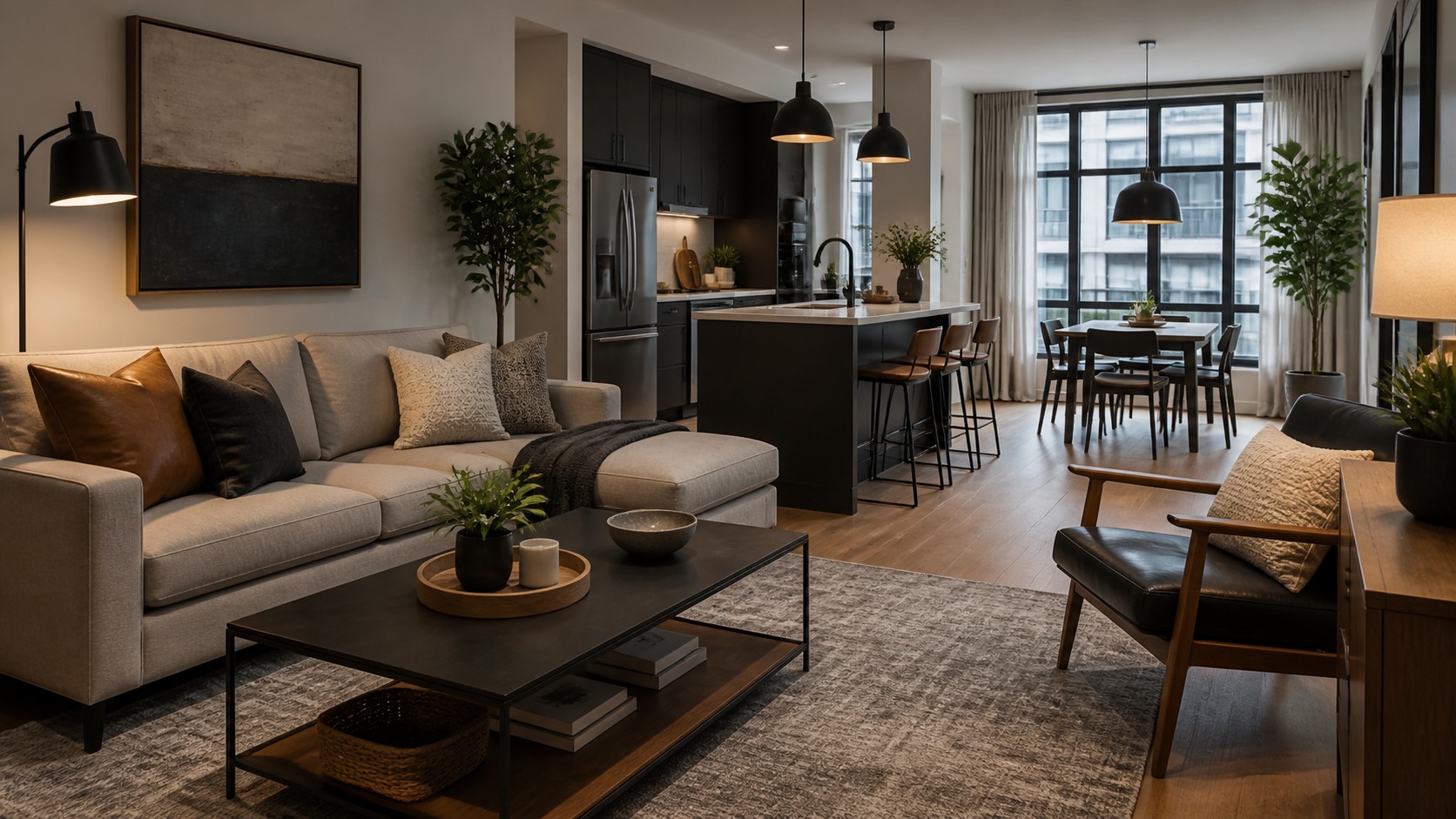
Modern apartments Style Guide: Colors, Furniture, Lighting, and Layout Tips starts with a simple idea: apartment style has to look good while surviving leases, tight rooms, shared walls, limited storage, and changing routines. This guide takes a balanced style system approach for renters who want a space that feels renter-smart, not copied from a catalog. Instead of chasing every trend, it shows how to make decisions around furniture silhouettes, comfort, and the pieces that earn their place every day.
A: For modern apartments, focus on furniture silhouettes and choose one visible action that improves daily use before adding another decorative layer.
A: For modern apartments, focus on renter-smart and choose one visible action that improves daily use before adding another decorative layer.
A: For modern apartments, focus on scale and choose one visible action that improves daily use before adding another decorative layer.
A: For modern apartments, focus on comfort and choose one visible action that improves daily use before adding another decorative layer.
A: For modern apartments, focus on storage and choose one visible action that improves daily use before adding another decorative layer.
A: For modern apartments, focus on furniture silhouettes and choose one visible action that improves daily use before adding another decorative layer.
A: For modern apartments, focus on renter-smart and choose one visible action that improves daily use before adding another decorative layer.
A: For modern apartments, focus on scale and choose one visible action that improves daily use before adding another decorative layer.
A: For modern apartments, focus on comfort and choose one visible action that improves daily use before adding another decorative layer.
A: For modern apartments, focus on storage and choose one visible action that improves daily use before adding another decorative layer.
Begin With What Already Works for Modern apartments
Instead of treating apartment style as a shopping list, this approach uses furniture silhouettes as the organizing idea behind every visible decision. Because apartments have fixed walls, standard cabinets, and limited square footage, the design has to work with what is already there. The smartest style choices make those limits look like deliberate boundaries. It gives the renter a repeatable design rule, which is far more useful than a random collection of attractive objects.
The most convincing choices in modern apartments usually come from restraint: one clear priority, a few hardworking pieces, and details that repeat with purpose. That may mean choosing a sofa with raised legs, a rug that defines a zone without swallowing the floor, or curtains that make the window feel taller. The goal is not to make the apartment look bigger at any cost; it is to make every choice feel like it belongs. It gives the renter a repeatable design rule, which is far more useful than a random collection of attractive objects.
Create a Furniture Hierarchy for Modern apartments
When the room needs to feel renter-smart, create a furniture hierarchy for modern apartments can turn ordinary rental surfaces into a space that looks planned rather than temporary. That may mean choosing a sofa with raised legs, a rug that defines a zone without swallowing the floor, or curtains that make the window feel taller. The goal is not to make the apartment look bigger at any cost; it is to make every choice feel like it belongs. The result is an apartment that photographs well, lives well, and does not require constant rearranging to make sense.
Instead of treating apartment style as a shopping list, this approach uses furniture silhouettes as the organizing idea behind every visible decision. This is where small decisions carry surprising weight. The height of a lamp, the shape of a side table, the distance between a chair and the wall, and the finish on storage baskets can either calm the room or make it feel unresolved. The result is an apartment that photographs well, lives well, and does not require constant rearranging to make sense.
Use Repetition to Tie Rooms Together for Modern apartments
For modern apartments, use repetition to tie rooms together for modern apartments is less about following a showroom formula and more about deciding how the apartment should support real life. This is where small decisions carry surprising weight. The height of a lamp, the shape of a side table, the distance between a chair and the wall, and the finish on storage baskets can either calm the room or make it feel unresolved. Most importantly, it keeps the apartment from feeling decorated once and then abandoned.
When the room needs to feel renter-smart, use repetition to tie rooms together for modern apartments can turn ordinary rental surfaces into a space that looks planned rather than temporary. A successful room also leaves room for change. Pieces should be easy to move, surfaces should be simple to restyle, and the overall palette should survive new bedding, new art, or a different work schedule. Most importantly, it keeps the apartment from feeling decorated once and then abandoned.
Keep Useful Items Within Reach for Modern apartments
A strong balanced style system begins when keep useful items within reach for modern apartments becomes specific to the way the renter moves, rests, cooks, works, and hosts. A successful room also leaves room for change. Pieces should be easy to move, surfaces should be simple to restyle, and the overall palette should survive new bedding, new art, or a different work schedule. When this layer is handled thoughtfully, even a plain rental begins to feel custom.
For modern apartments, keep useful items within reach for modern apartments is less about following a showroom formula and more about deciding how the apartment should support real life. Renters often make the mistake of adding personality only at the end. A better path is to let personality guide scale, color, and texture from the beginning, so practical pieces do not feel like compromises. When this layer is handled thoughtfully, even a plain rental begins to feel custom.
Let Windows Decide the Mood for Modern apartments
The most convincing choices in modern apartments usually come from restraint: one clear priority, a few hardworking pieces, and details that repeat with purpose. Renters often make the mistake of adding personality only at the end. A better path is to let personality guide scale, color, and texture from the beginning, so practical pieces do not feel like compromises. That is what makes the space feel finished: not perfection, but a visible relationship between comfort, function, and taste.
A strong balanced style system begins when let windows decide the mood for modern apartments becomes specific to the way the renter moves, rests, cooks, works, and hosts. Because apartments have fixed walls, standard cabinets, and limited square footage, the design has to work with what is already there. The smartest style choices make those limits look like deliberate boundaries. That is what makes the space feel finished: not perfection, but a visible relationship between comfort, function, and taste.
Mix Old and New on Purpose for Modern apartments
Instead of treating apartment style as a shopping list, this approach uses furniture silhouettes as the organizing idea behind every visible decision. Because apartments have fixed walls, standard cabinets, and limited square footage, the design has to work with what is already there. The smartest style choices make those limits look like deliberate boundaries. It gives the renter a repeatable design rule, which is far more useful than a random collection of attractive objects.
The most convincing choices in modern apartments usually come from restraint: one clear priority, a few hardworking pieces, and details that repeat with purpose. That may mean choosing a sofa with raised legs, a rug that defines a zone without swallowing the floor, or curtains that make the window feel taller. The goal is not to make the apartment look bigger at any cost; it is to make every choice feel like it belongs. It gives the renter a repeatable design rule, which is far more useful than a random collection of attractive objects.
Give the Eye Somewhere to Rest for Modern apartments
When the room needs to feel renter-smart, give the eye somewhere to rest for modern apartments can turn ordinary rental surfaces into a space that looks planned rather than temporary. That may mean choosing a sofa with raised legs, a rug that defines a zone without swallowing the floor, or curtains that make the window feel taller. The goal is not to make the apartment look bigger at any cost; it is to make every choice feel like it belongs. The result is an apartment that photographs well, lives well, and does not require constant rearranging to make sense.
Instead of treating apartment style as a shopping list, this approach uses furniture silhouettes as the organizing idea behind every visible decision. This is where small decisions carry surprising weight. The height of a lamp, the shape of a side table, the distance between a chair and the wall, and the finish on storage baskets can either calm the room or make it feel unresolved. The result is an apartment that photographs well, lives well, and does not require constant rearranging to make sense.
Make the Final Layer Personal for Modern apartments
For modern apartments, make the final layer personal for modern apartments is less about following a showroom formula and more about deciding how the apartment should support real life. This is where small decisions carry surprising weight. The height of a lamp, the shape of a side table, the distance between a chair and the wall, and the finish on storage baskets can either calm the room or make it feel unresolved. Most importantly, it keeps the apartment from feeling decorated once and then abandoned.
When the room needs to feel renter-smart, make the final layer personal for modern apartments can turn ordinary rental surfaces into a space that looks planned rather than temporary. A successful room also leaves room for change. Pieces should be easy to move, surfaces should be simple to restyle, and the overall palette should survive new bedding, new art, or a different work schedule. Most importantly, it keeps the apartment from feeling decorated once and then abandoned.
Pulling the Look Together Without Overworking It
The best version of modern apartments does not need every inch to announce itself. It needs a few confident choices that repeat: a material that appears in more than one place, a color that moves from room to room, lighting that changes with the evening, and storage that disappears into the background when it is not being used. When those elements work together, the apartment feels complete even if the renter is still improving it over time.
Use this guide as a decision filter rather than a rigid checklist. If an item makes the apartment easier to live in, supports the mood, and fits the physical limits of the rental, it deserves consideration. If it only fills space, creates a new chore, or fights the layout, leave it out. That discipline is what gives apartment design its quiet confidence.
One more useful test for modern apartments is to stand at the doorway and name what the eye notices first, second, and third. If the first view is clutter, exposed cords, mismatched storage, or furniture backs, the room may need a clearer anchor. If the first view is light, texture, a comfortable seat, or a well-scaled piece of art, the apartment already has a stronger design story. This simple doorway check keeps styling practical because it connects beauty to the way the home is actually experienced.
One more useful test for modern apartments is to stand at the doorway and name what the eye notices first, second, and third. If the first view is clutter, exposed cords, mismatched storage, or furniture backs, the room may need a clearer anchor. If the first view is light, texture, a comfortable seat, or a well-scaled piece of art, the apartment already has a stronger design story. This simple doorway check keeps styling practical because it connects beauty to the way the home is actually experienced.
One more useful test for modern apartments is to stand at the doorway and name what the eye notices first, second, and third. If the first view is clutter, exposed cords, mismatched storage, or furniture backs, the room may need a clearer anchor. If the first view is light, texture, a comfortable seat, or a well-scaled piece of art, the apartment already has a stronger design story. This simple doorway check keeps styling practical because it connects beauty to the way the home is actually experienced.


