Apartment living is an art form built on intentional choices, efficient systems, and a deep understanding of space. Unlike larger homes, where excess items can quietly accumulate, apartments demand clarity. Every item has to justify its presence. Smart packing strategies begin not with boxes or bins, but with mindset. The goal is not simply to fit everything into a smaller footprint, but to create a living environment that feels open, functional, and calming. The first shift is moving from ownership to utility. Instead of asking “Do I have room for this?” the better question becomes “Does this serve a clear purpose in my daily life?” This mindset naturally filters out clutter and makes packing decisions more strategic. When each item has value, packing becomes less about cramming and more about organizing with intention.
A: Start with off-season clothes, décor, books, and anything you use rarely.
A: Often yes for apartment living because they stack better, protect contents, and work for long-term storage.
A: Edit aggressively, use slim hangers, rotate seasonal items, and store extras in labeled bins.
A: Bringing too much into a space that already has limited storage.
A: Only if it fits safely through doors, halls, and stairs—otherwise break it down to save headaches.
A: Use towels, socks, sweaters, and linens as soft protective layers.
A: Toiletries, chargers, paper goods, basic kitchen tools, medications, and one change of clothes.
A: Use closed storage, keep surfaces clear, and give every daily item a defined home.
A: Yes, especially for bedding, coats, and seasonal clothing in tight apartments.
A: Pack with future storage, daily convenience, and limited square footage in mind—not just the move itself.
Decluttering Before Packing: The Power of Less
Before a single box is filled or a storage bin is purchased, the most impactful step is decluttering. Packing without decluttering simply transfers inefficiency from one space to another. Apartment living rewards minimalism, not excess, and the process of letting go is where real transformation begins.
Decluttering is not about getting rid of everything. It is about creating clarity. Begin by evaluating items in categories rather than locations. Look at all your clothing at once, then your kitchen tools, then your paperwork. This approach makes it easier to spot duplicates and unnecessary items. You may find three spatulas when you only use one, or stacks of papers that no longer serve a purpose.
Emotion often plays a role in clutter. Sentimental items can be difficult to part with, but even here, smart packing offers solutions. Instead of keeping everything, consider digitizing photos or selecting a few meaningful pieces to display. The goal is not to erase memories, but to preserve them in a way that respects your space.
Once decluttering is complete, packing becomes dramatically easier. Fewer items mean fewer storage challenges, more breathing room, and a cleaner aesthetic. In a small apartment, less is not a sacrifice. It is a strategic advantage.
Maximizing Vertical Space for Hidden Capacity
One of the most overlooked opportunities in apartment living is vertical space. While floor space is limited, walls offer a vast, often underutilized resource. Smart packing strategies extend upward, transforming blank walls into functional storage zones.
Shelving is a cornerstone of vertical organization. Floating shelves, tall bookcases, and wall-mounted racks allow you to store items without consuming valuable floor area. In kitchens, vertical storage can hold spices, utensils, or cookware. In living areas, it can display books, décor, or media equipment. The key is to keep it visually organized so that storage does not become clutter.
Closets also benefit from vertical thinking. Double hanging rods, stackable bins, and hanging organizers can effectively double or triple storage capacity. Even small closets can feel spacious when items are layered thoughtfully from top to bottom.
Another powerful technique is using the space above furniture. The area above cabinets, wardrobes, or refrigerators can hold storage boxes for seasonal items or rarely used belongings. These zones keep less frequently accessed items out of the way while preserving easy access to everyday essentials.
Vertical packing is not just about adding more storage. It is about redistributing space in a way that keeps your apartment open and functional. When you look up instead of out, the possibilities expand dramatically.
Multifunctional Furniture as a Packing Strategy
In apartment living, furniture is not just about comfort or style. It is a critical component of your packing system. Multifunctional furniture allows you to integrate storage directly into your living space, reducing the need for additional containers or clutter.
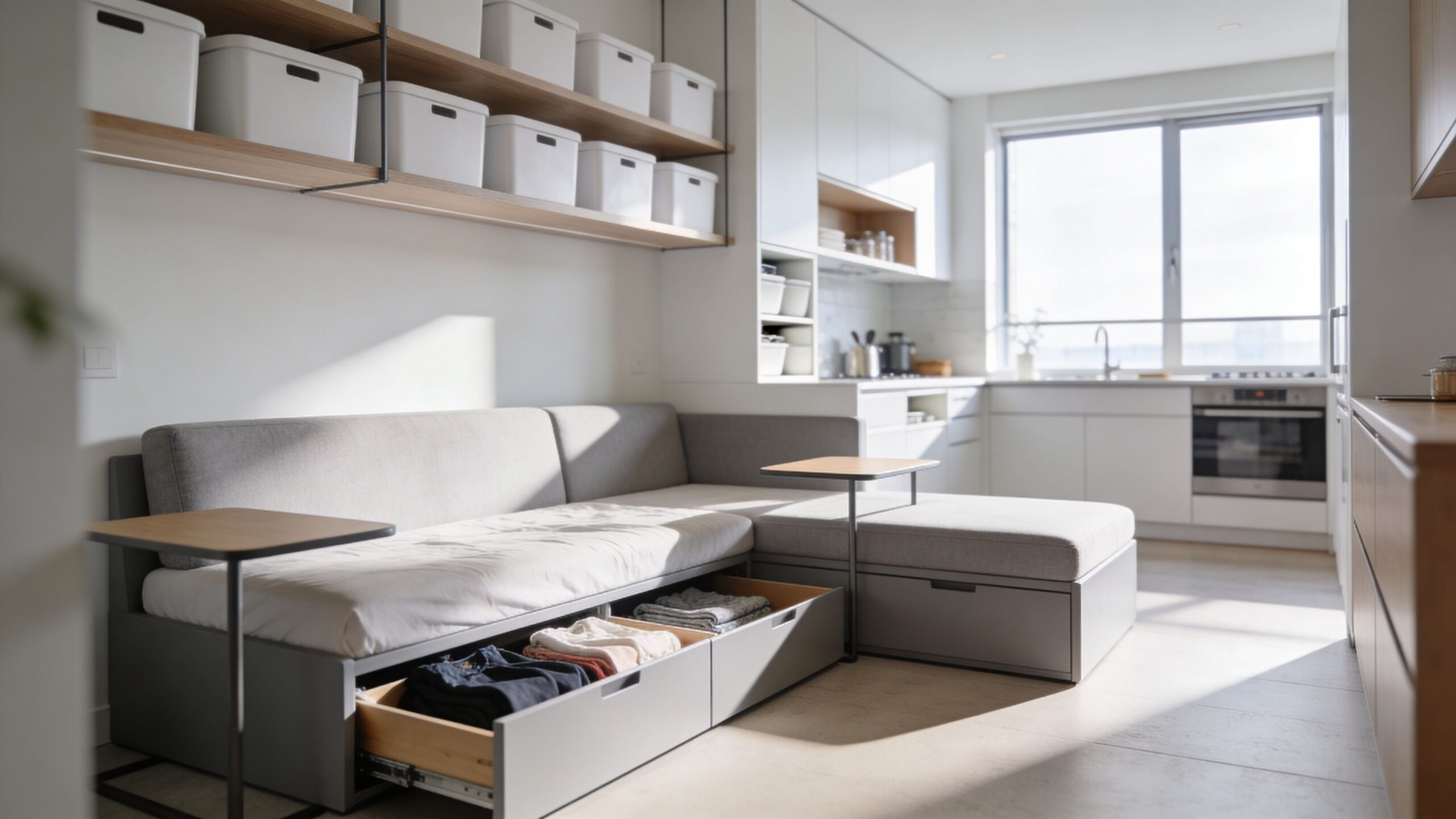
Beds with built-in drawers or lift-up storage compartments provide significant hidden capacity. This is an ideal place for seasonal clothing, extra bedding, or rarely used items. Instead of taking up closet space, these belongings are neatly stored beneath your sleeping area.
Sofas and ottomans with storage compartments serve a similar purpose in living rooms. They can hold blankets, books, or miscellaneous items while maintaining a clean and organized appearance. Coffee tables with shelving or hidden compartments also contribute to this layered storage approach.
Even smaller pieces of furniture can play a role. Foldable desks, nesting tables, and expandable dining sets allow you to adapt your space as needed. When not in use, they reduce visual clutter and free up room for movement.
Multifunctional furniture turns your apartment into a dynamic environment. Instead of separate zones for storage and living, everything works together seamlessly. This integration is one of the most effective ways to pack smart without sacrificing comfort.
Room-by-Room Packing Systems That Work
Each area of an apartment presents unique challenges and opportunities. A one-size-fits-all packing approach rarely works. Instead, tailoring your strategy to each room ensures maximum efficiency and usability.
In the kitchen, prioritize accessibility. Frequently used items should be within easy reach, while rarely used appliances can be stored in higher cabinets or less accessible areas. Drawer organizers and stackable containers help maintain order and prevent wasted space.
In the bedroom, focus on creating a calm and uncluttered environment. Use under-bed storage, closet organizers, and minimal décor to keep the space open. Clothing should be rotated seasonally, with off-season items stored out of sight.
Living rooms often serve multiple purposes, from relaxation to entertainment to work. Here, hidden storage is especially valuable. Use baskets, storage ottomans, and shelving units to keep items organized without overwhelming the space.
Bathrooms benefit from compact and vertical solutions. Wall-mounted shelves, over-the-toilet storage, and small bins can keep essentials organized without crowding limited counter space.
By treating each room as its own system, you create a cohesive yet flexible approach to packing. Every space becomes optimized for its specific function, contributing to a more harmonious overall environment.
Smart Storage Tools That Transform Small Spaces
The right tools can make a significant difference in how effectively you pack and organize your apartment. While the goal is not to accumulate more items, strategic use of storage solutions can enhance efficiency and maintain order.
Clear containers are particularly useful because they allow you to see contents at a glance. This reduces the need to rummage through multiple bins and keeps everything accessible. Labeling further enhances this system, especially for items stored out of immediate reach.
Vacuum-sealed bags are another powerful tool, especially for clothing and bedding. By compressing bulky items, they free up valuable space in closets and storage areas. This is especially helpful for seasonal rotations.
Drawer dividers and organizers create structure within small spaces. Instead of chaotic drawers, you have clearly defined sections for different items. This not only saves space but also reduces daily friction when searching for things.
Hooks and adhesive organizers provide additional storage without permanent installation. They can be used for everything from kitchen utensils to bathroom towels to entryway essentials. These small additions can have a surprisingly large impact on functionality.
The key with storage tools is intentional use. Each item should serve a clear purpose and integrate seamlessly into your overall system. When chosen wisely, these tools amplify your packing strategy rather than complicate it.
Seasonal Rotation and Long-Term Storage Planning
Apartment living often requires thinking beyond immediate needs. Seasonal rotation is a critical strategy for maintaining balance throughout the year. Instead of trying to store everything at once, you adapt your space based on current priorities.
Clothing is the most obvious example. Winter coats, heavy sweaters, and boots can take up significant space during warmer months. By storing them in vacuum-sealed bags or designated storage bins, you free up room for lighter, more relevant items.
The same principle applies to décor and recreational items. Holiday decorations, sports equipment, and seasonal accessories can be stored out of sight until needed. This prevents your apartment from feeling overcrowded and keeps your living space aligned with your current lifestyle.
Long-term storage planning also involves identifying items that are rarely used but still valuable. These items can be stored in higher or less accessible areas, such as the tops of closets or dedicated storage units. The goal is to keep your primary living areas focused on daily use.
By embracing seasonal rotation, you create a dynamic system that evolves with your needs. Your apartment remains functional and uncluttered, regardless of the time of year.
Creating a Lifestyle That Stays Organized
The final piece of smart packing is sustainability. It is not enough to organize once. The true challenge is maintaining that organization over time. This requires habits, routines, and a commitment to intentional living. Daily habits play a significant role. Returning items to their designated places, managing incoming clutter, and regularly reassessing your belongings prevent small issues from becoming overwhelming. Consistency is more effective than occasional large cleanups. Periodic reviews are also important. Every few months, take time to evaluate your space and identify areas that need adjustment. As your lifestyle changes, your packing system should adapt accordingly. What worked six months ago may need refinement today. Mindful consumption is another key factor. Before bringing new items into your apartment, consider where they will fit and how they will be used. This prevents unnecessary accumulation and keeps your space aligned with your goals. Ultimately, smart packing strategies are about more than organization. They are about creating a living environment that supports your life rather than complicates it. In an apartment, where space is limited, this approach transforms constraints into opportunities. With the right mindset, tools, and habits, small spaces can feel expansive, efficient, and uniquely yours.